
Mount Rinjani, an active Volcano in Indonesia

Mount Rinjani, also known as Gunung Rinjani, is the second tallest volcano in Indonesia, situated on Lombok Island, which is part of the Nusa Tenggara Barat Province. This active volcano reaches an elevation of 3,726 meters (12,224 feet) and has been designated as one of the over 40 National Parks in Indonesia since 1997, officially named Taman National Gunung Rinjani (TNGR).
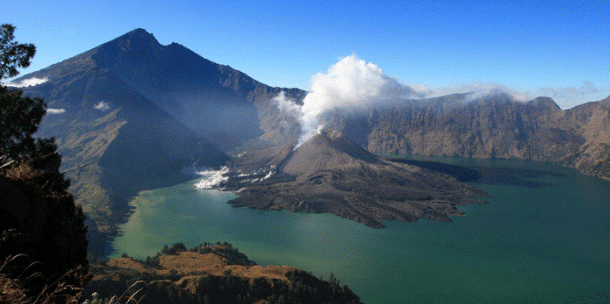
The caldera of Mount Rinjani is oval in shape, measuring 6 km by 8.5 km, and is partially filled by a crater lake known as Danau Segara Anak. This lake is located at an altitude of 2,000 meters above sea level and is estimated to be around 200 meters deep at certain points. The caldera also features hot springs. Within the lake, various species of fish can be found, along with an endemic duck species known as Belibis.
The eruptive history of Rinjani before 1847 is not documented, as the island of Lombok was situated in a region that was largely inaccessible to record-keeping during that period.
The first recorded eruption took place in September 1847, limited to the Barujari cone and the Rombongan dome (in 1944), characterized by moderate explosive activity and sporadic lava flows that reached Segara Anak Lake. The most notable eruptions occurred during a series of activities from 1994 to 1995, leading to the further formation of Gunung Barujari (Mt. Baru 2363).
The most recent eruption has been ongoing since April 2009 and continues to the present (July 2010). The park was temporarily closed due to heightened volcanic activity but was reopened once the activity subsided. However, access remains restricted near Gunung Barujari (Mt. Baru) due to the volcano’s regular ash emissions and the strong odor of sulfur.
Communities and Lifestyles
The population of Lombok Island is predominantly composed of Sasak ethnic groups, with the majority of the slopes surrounding Mt. Rinjani National Park inhabited by the indigenous Sasak community. Only a small area is home to a group of Balinese who coexist alongside them.
For both the Sasak and Balinese people of Lombok, Mt. Rinjani is regarded as a sacred site and the dwelling place of deities. The Segara Anak crater lake attracts thousands of pilgrims who visit for its spiritual significance. They conduct a secret annual ceremony at the onset of the rainy season, offering gifts to the waters and praying for favorable rainfall to support their agricultural activities, as well as bathing in the hot springs to cleanse themselves of ailments.
The highland areas are covered in forests and remain largely undeveloped, while the lowlands are extensively cultivated by the local inhabitants. The island’s fertile soils yield a variety of major crops, including rice, soybeans, coffee, tobacco, cotton, cinnamon, cacao, cloves, cassava, corn, coconuts, copra, bananas, and vanilla.
Trekking to Mt. Rinjani National Park (TNGR)
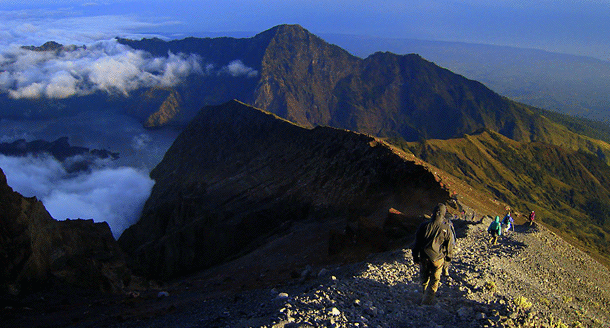
The Rinjani trek presents a demanding mountain hike, necessitating adequate equipment and warm, wind-resistant clothing. The region is prone to severe storms, lightning, and strong winds. During stable weather, the sun can be quite intense, while nights tend to be chilly.
Certain sections of the trail are steep and can be slippery. It is crucial to be cautious of adverse weather conditions and the potential risks of exposure to wet and cold environments, which can lead to hypothermia. In the event of an electrical storm, it is advisable to seek shelter and avoid high ridges. Additionally, be mindful of stinging insects and plants, as well as the presence of leeches, which can be bothersome during the wet season.
Individuals suffering from mountain sickness or a fear of heights are advised against participating in trekking activities on Mount Rinjani, as evacuation options are severely limited, whether by car or helicopter. In emergencies, assistance or evacuation in the event of an accident relies on human effort until reaching a point accessible by vehicles or other forms of transportation. Therefore, all trekkers should adequately prepare in advance, ensuring their physical fitness and health are suitable for the long-distance trails of the Mount Rinjani trek before embarking on their journey.
It is strictly prohibited to trek Mount Rinjani, Lombok without the assistance of a trekking guide. Access to Taman National Gunung Rinjani is only permitted through designated gates, and an entrance fee of Rp. 250,000 per person per day is required for entry into the national park. Ensure that your trip to Mount Rinjani is booked exclusively through licensed trekking organizers or travel agencies.
Volcanic Hazards:
Although Mt.Rinjani has not erupted in recorded history, Mt.Baru (2,351m) in the crater lake is an active volcano. It erupted dramatically in 1994. After 10 years periodically actives in 2004 and 2009 resulting new crater on body side of Gunung Baru Jari. Check the notice boards for recent hazards and take advice from park staff and guides.
Spring Water:
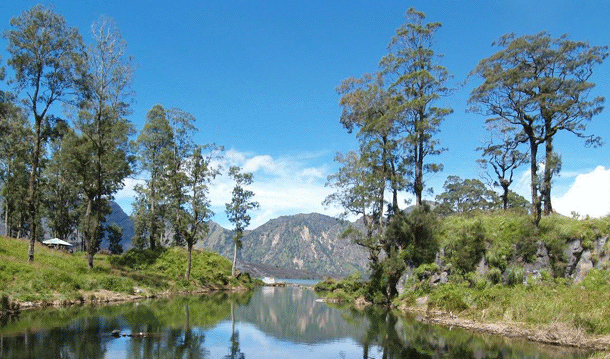
Fresh water springs are a feature of the trek and determine campsites. Your guide knows where these are. During the drier months (July – September) some springs completely disappear. Park staff and guides constantly monitor these water sources to determine their abundance.
Our Philosophy
We deal largely in ecotourism & adventure travel, but for us adventures are not just the rugged kind. An adventure can take many forms and need involve little that is overly strenuous – to us every trip is a voyage of discovery and hence an adventure. The guiding philosophy behind each is that the trip be environmentally friendly and sustainable. This means impacting as little as possible on the peoples and places we visit, always respecting the distinctiveness and special qualities of each.
The way we do it must be environmentally friendly as well as economically and physically efficient. This means we trek, cook, camp and shows you more of the things with care and attentions. We use mechanized transport when we have to cover long distances in limited time; even so, we use local modes of transportation as far as possible to maximize exposure to the local lifestyles and to get close to the people. As a consequence, during the tours there is a lot of opportunity to learn about and from the indigenous peoples.
Telephone Communication:
Cell phone (GSM) covers most area of Rinjani National Park. Most guide carry their own mobile phone. Not all cellular operators can be used. Pro XL, Mentari and Simpati are recommended.
Booking Mount Rinjani Trekking:
Book your trip to Mt. Rinjani through licensed Rinjani trek organizer or travel agency, it’s safer and you will get more maximal service with the money that you spend for it as they expecting any recommendation and good feedback from you. If you buy the trip from street vendor which is offering, you cheap price they will give you minimal service too and there is no where you can address your complaining. Most of them are unlicensed too.
“You will get what you pay”
Booking with us at lombok-eccotour.com is licensed travel agent include trek organizer.
Lombok Eco Tour offers: